Melon - Banana
Minimum Seed Count: 10
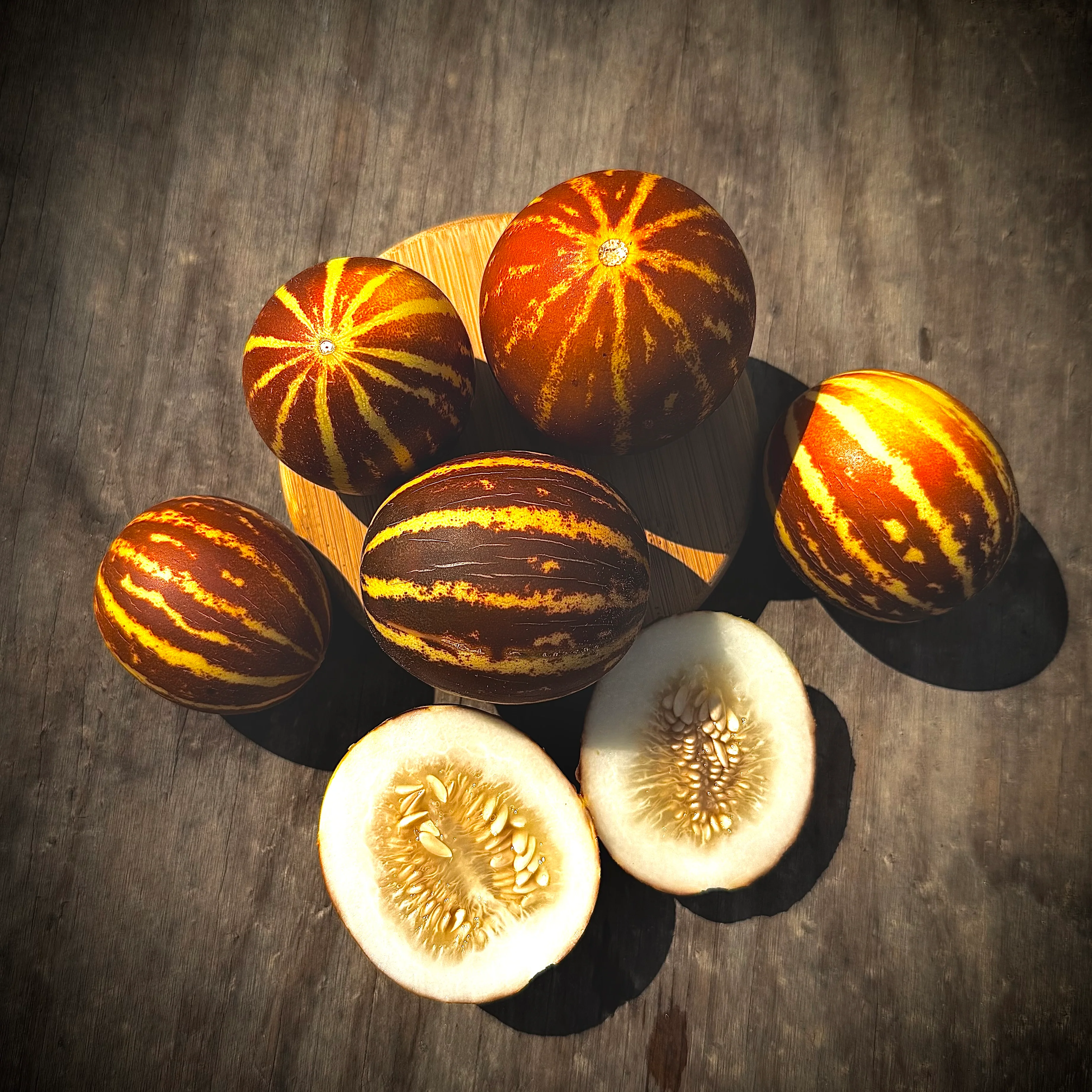
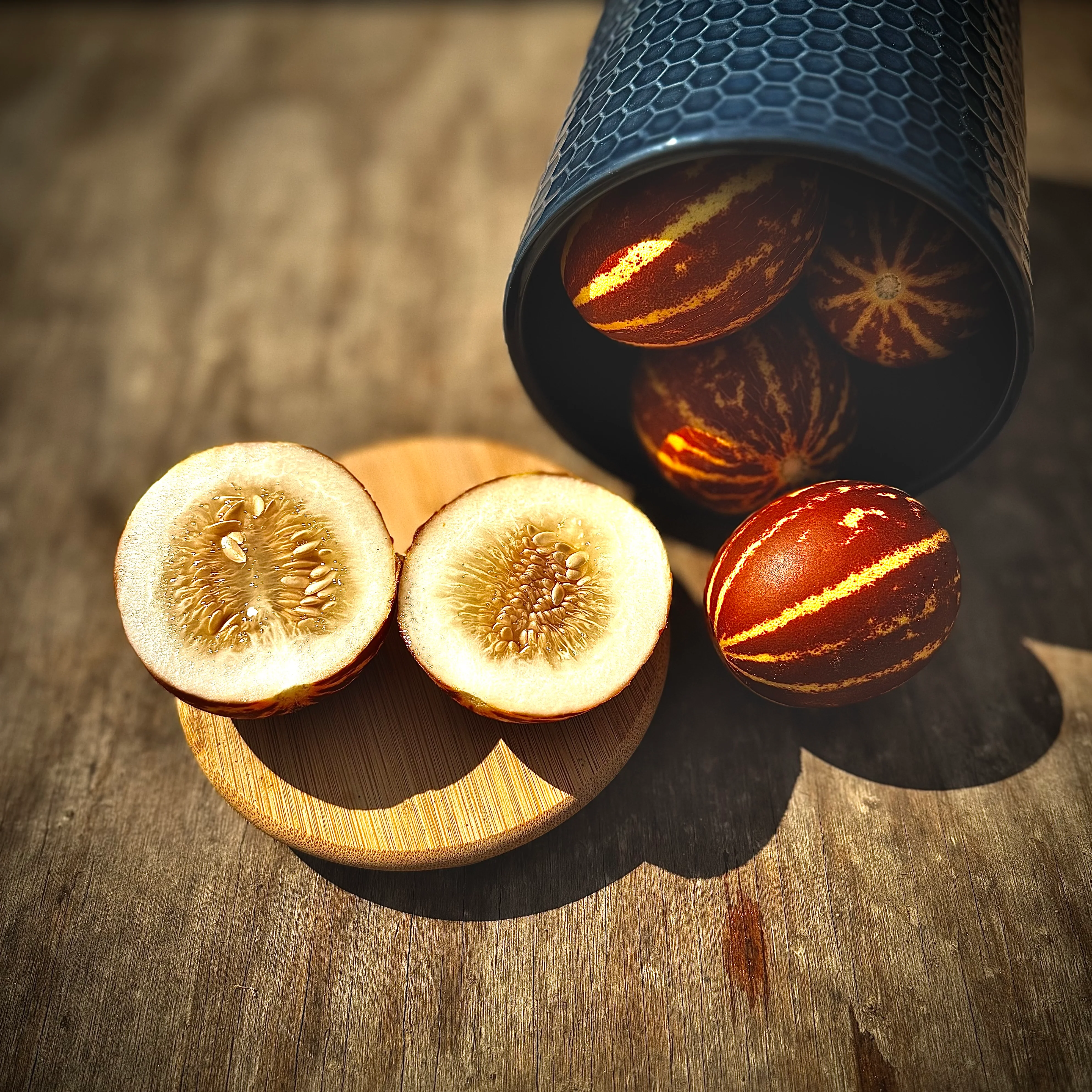
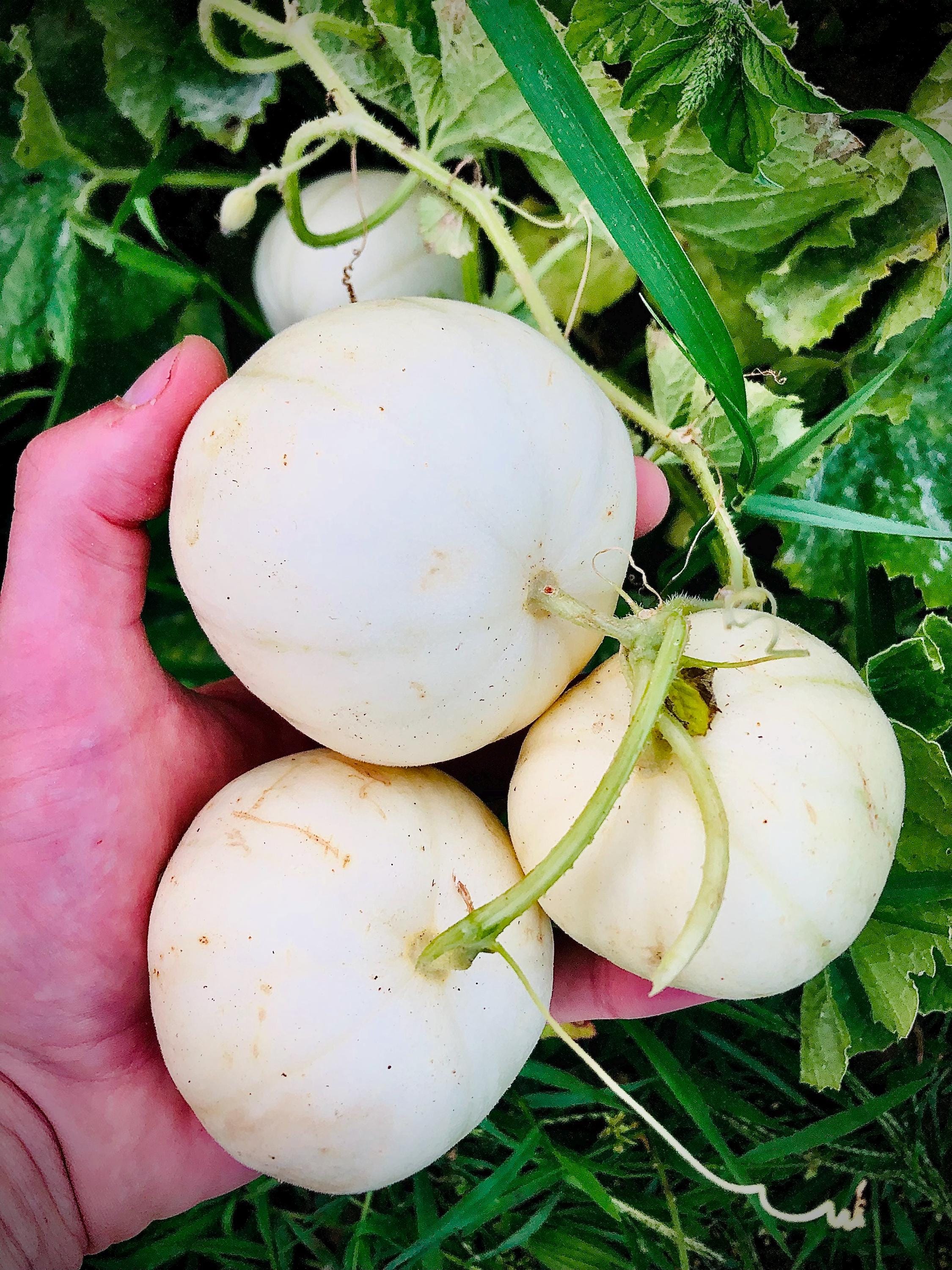
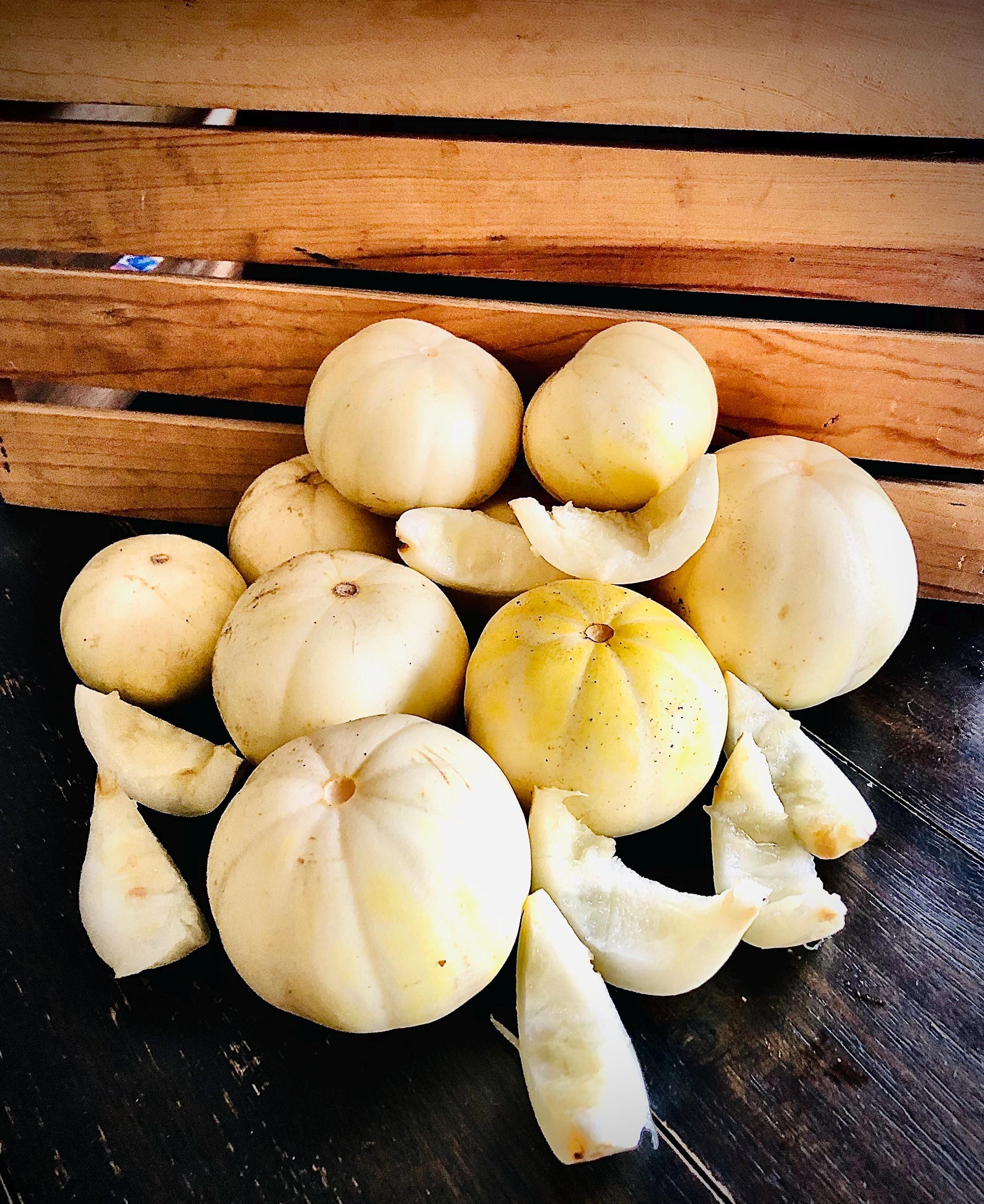
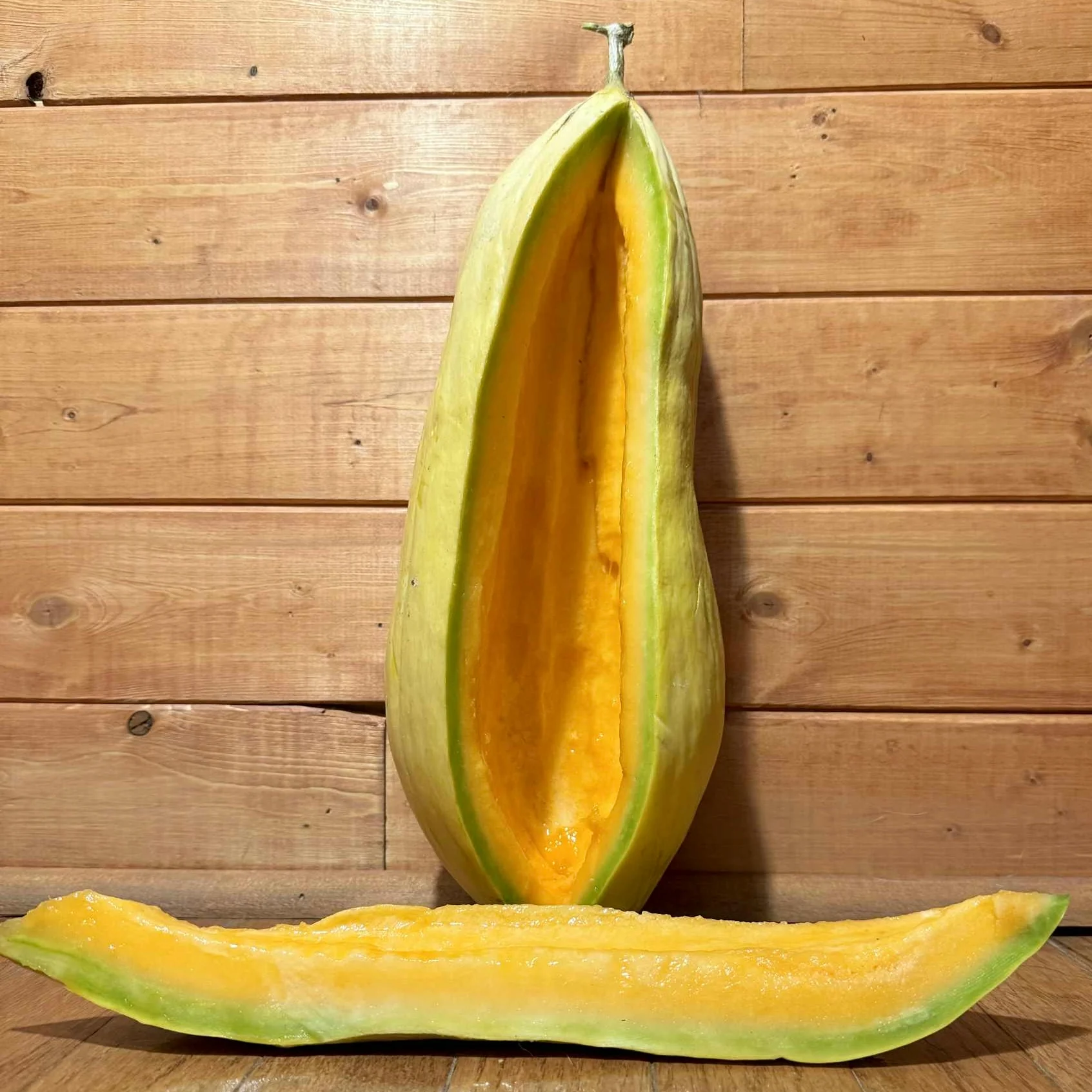
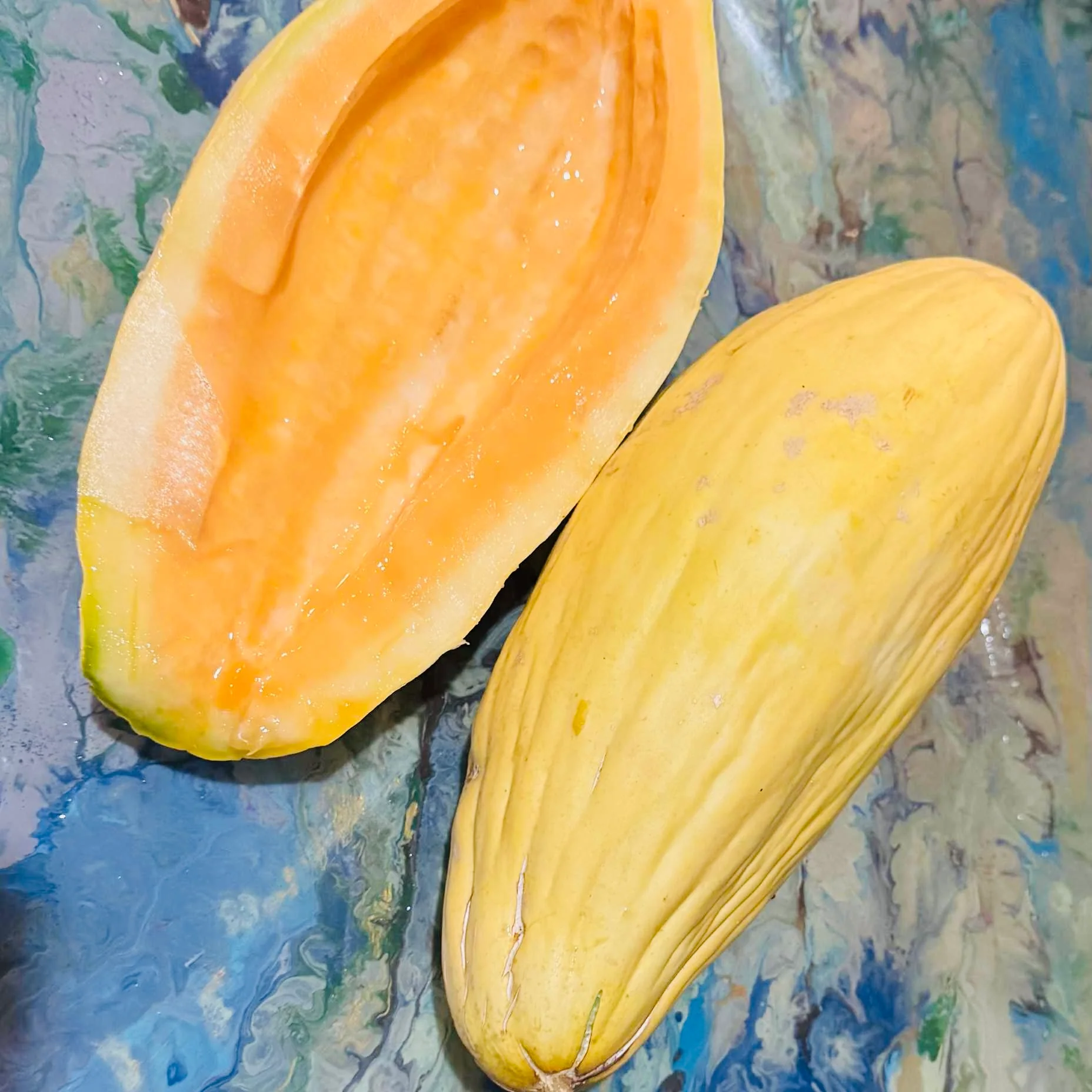
The Banana Melon is a historic American heirloom dating back to the 1880s, prized for its unique look and tropical sweetness. Its long, banana-shaped fruits grow up to 18 inches in length and turn a golden yellow when ripe, giving off a rich, spicy fragrance. The flesh inside is a salmon-orange color—juicy, smooth, and bursting with a flavor often compared to a blend of cantaloupe and banana. Beyond its novelty appearance, this melon is loved for its heavy yields and old-fashioned dessert quality, making it a true conversation piece in any garden or market stand.
🌱 Planting Guide:
Soil Preparation:
-
Prefers loose, fertile, well-draining soil with plenty of organic matter.
-
Ideal pH: 6.0–6.8.
-
Work in compost or aged manure before planting.
Planting:
-
Direct sow outdoors after danger of frost has passed and soil has warmed to at least 70°F.
-
Sow seeds ½–1 inch deep.
-
Space seeds 18–24 inches apart in rows 5–6 feet apart, or plant in hills with 3–4 seeds per hill, thinned to the strongest two.
Sunlight:
-
Requires full sun (at least 6–8 hours daily).
Watering:
-
Keep soil evenly moist, especially during flowering and fruit development.
-
Water at the base to avoid leaf diseases. Reduce watering as fruit ripens for sweeter flavor.
Support & Growth:
-
Vines can spread 8–10 feet, so give them room or train on a sturdy trellis for straighter fruits.
Fertilization:
-
Side-dress with compost or a balanced fertilizer once vines begin running.
-
Avoid excess nitrogen, which promotes foliage over fruit.
Pollination:
-
Banana melons rely on bees for pollination. Encourage pollinators by planting flowers nearby.
Harvesting:
-
Fruits are ready about 90 days from sowing.
-
Harvest when the rind turns golden-yellow and emits a sweet, fruity aroma.
-
Melons should slip easily from the vine with a gentle twist.
Storage:
-
Best eaten fresh but can store for about a week in a cool location.
Product Information
Product Information
Shipping & Returns
Shipping & Returns
Melon - Banana
Melon - Banana
Minimum Seed Count: 10
The Banana Melon is a historic American heirloom dating back to the 1880s, prized for its unique look and tropical sweetness. Its long, banana-shaped fruits grow up to 18 inches in length and turn a golden yellow when ripe, giving off a rich, spicy fragrance. The flesh inside is a salmon-orange color—juicy, smooth, and bursting with a flavor often compared to a blend of cantaloupe and banana. Beyond its novelty appearance, this melon is loved for its heavy yields and old-fashioned dessert quality, making it a true conversation piece in any garden or market stand.
🌱 Planting Guide:
Soil Preparation:
-
Prefers loose, fertile, well-draining soil with plenty of organic matter.
-
Ideal pH: 6.0–6.8.
-
Work in compost or aged manure before planting.
Planting:
-
Direct sow outdoors after danger of frost has passed and soil has warmed to at least 70°F.
-
Sow seeds ½–1 inch deep.
-
Space seeds 18–24 inches apart in rows 5–6 feet apart, or plant in hills with 3–4 seeds per hill, thinned to the strongest two.
Sunlight:
-
Requires full sun (at least 6–8 hours daily).
Watering:
-
Keep soil evenly moist, especially during flowering and fruit development.
-
Water at the base to avoid leaf diseases. Reduce watering as fruit ripens for sweeter flavor.
Support & Growth:
-
Vines can spread 8–10 feet, so give them room or train on a sturdy trellis for straighter fruits.
Fertilization:
-
Side-dress with compost or a balanced fertilizer once vines begin running.
-
Avoid excess nitrogen, which promotes foliage over fruit.
Pollination:
-
Banana melons rely on bees for pollination. Encourage pollinators by planting flowers nearby.
Harvesting:
-
Fruits are ready about 90 days from sowing.
-
Harvest when the rind turns golden-yellow and emits a sweet, fruity aroma.
-
Melons should slip easily from the vine with a gentle twist.
Storage:
-
Best eaten fresh but can store for about a week in a cool location.
Original: $4.50
-65%$4.50
$1.57Product Information
Product Information
Shipping & Returns
Shipping & Returns
Description
Minimum Seed Count: 10
The Banana Melon is a historic American heirloom dating back to the 1880s, prized for its unique look and tropical sweetness. Its long, banana-shaped fruits grow up to 18 inches in length and turn a golden yellow when ripe, giving off a rich, spicy fragrance. The flesh inside is a salmon-orange color—juicy, smooth, and bursting with a flavor often compared to a blend of cantaloupe and banana. Beyond its novelty appearance, this melon is loved for its heavy yields and old-fashioned dessert quality, making it a true conversation piece in any garden or market stand.
🌱 Planting Guide:
Soil Preparation:
-
Prefers loose, fertile, well-draining soil with plenty of organic matter.
-
Ideal pH: 6.0–6.8.
-
Work in compost or aged manure before planting.
Planting:
-
Direct sow outdoors after danger of frost has passed and soil has warmed to at least 70°F.
-
Sow seeds ½–1 inch deep.
-
Space seeds 18–24 inches apart in rows 5–6 feet apart, or plant in hills with 3–4 seeds per hill, thinned to the strongest two.
Sunlight:
-
Requires full sun (at least 6–8 hours daily).
Watering:
-
Keep soil evenly moist, especially during flowering and fruit development.
-
Water at the base to avoid leaf diseases. Reduce watering as fruit ripens for sweeter flavor.
Support & Growth:
-
Vines can spread 8–10 feet, so give them room or train on a sturdy trellis for straighter fruits.
Fertilization:
-
Side-dress with compost or a balanced fertilizer once vines begin running.
-
Avoid excess nitrogen, which promotes foliage over fruit.
Pollination:
-
Banana melons rely on bees for pollination. Encourage pollinators by planting flowers nearby.
Harvesting:
-
Fruits are ready about 90 days from sowing.
-
Harvest when the rind turns golden-yellow and emits a sweet, fruity aroma.
-
Melons should slip easily from the vine with a gentle twist.
Storage:
-
Best eaten fresh but can store for about a week in a cool location.